When the Woke Right Starts Sounding Like Fidel Castro
Anti-Zionism is becoming a political bridge that carries parts of the populist right into ideological territory long occupied by the anti-imperialist left. Miami’s Cuban and Venezuelan Americans have heard this language before.
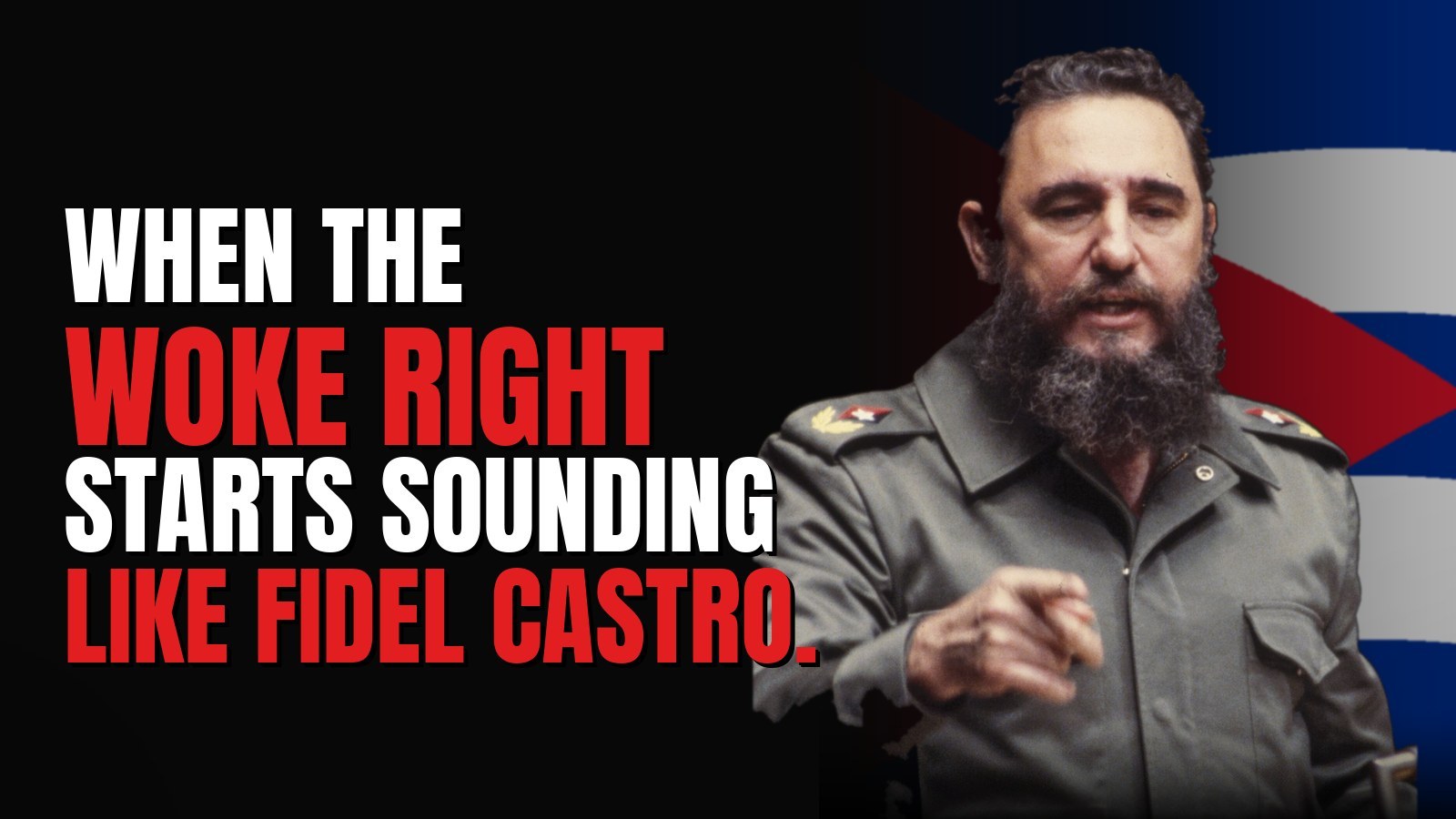
Something strange is happening on the American right: its loudest anti-Zionist voices are beginning to echo rhetoric Miami’s Cuban and Venezuelan Americans have spent generations associating with Fidel Castro and Hugo Chávez.
Anti-Zionism wrapped in anti-imperialism is not some new political discovery born on podcasts after October 7. We have heard this language before: Israel portrayed as an extension of American imperialism, Zionism blamed for conflict and corruption, and the United States cast not as a force for good but as the villain behind the world’s problems.
That history matters because anti-Zionism is increasingly becoming a political bridge, one that is bringing parts of the populist right into ideological territory long occupied by the anti-imperialist left.
To be clear, criticizing Israel does not make someone a communist. Questioning foreign aid does not make someone anti-American. Conservatives can disagree with Benjamin Netanyahu, Israeli policy, or America’s role in the Middle East.
My concern is what can happen after that criticism becomes an entire political worldview.
There is a pipeline worth examining: Israel becomes the entry point. Then Zionism becomes the explanation for America’s problems. Then American foreign policy itself becomes fundamentally corrupt. Then American global power becomes something to dismantle. Eventually, people who entered the conversation from the right find themselves sharing political language and increasingly political spaces with people from the revolutionary left.
We don’t have to speculate about whether anti-Zionism has historically been part of that worldview. Fidel Castro told us himself.
Addressing the United Nations in 1979, Castro explicitly linked “imperialism and Zionism,” accused them of committing genocide against Palestinians, and blamed U.S. support for Israel for preventing peace.
This wasn’t an isolated disagreement over Israeli policy. Cuba’s support for the Palestinian cause existed within Castro’s larger revolutionary struggle against American capitalism and what his government regarded as Western imperialism.
Then came Hugo Chávez.
Venezuelans in South Florida should remember this history particularly well. Chávez severed diplomatic relations with Israel in 2009. He called Israel a “genocidal state” and later a “cursed terrorist and murderous state.” He also claimed Israel financed his political opposition and suggested Mossad operatives were trying to assassinate him.
For Venezuela’s Jewish community, the political climate had consequences beyond foreign policy. Jewish organizations documented antisemitic rhetoric and conspiracy theories during the Chávez years, while Jewish institutions were attacked. Chávez himself denied hostility toward Venezuelan Jews and said they had his “affection and respect.”
Now listen to some of the conversations happening in America in 2026.
This week, Tucker Carlson hosted Max Blumenthal for more than two hours. The discussion went far beyond debating aid to Israel. It included alleged Israeli influence over American politics, AIPAC, Iran, Christian Zionism, “The Fall of MAGA,” and what happened to Turning Point USA.
Carlson and Blumenthal certainly don’t have identical political philosophies. That’s precisely what makes their alliance interesting.
People who arrived at this debate from completely different political traditions are increasingly finding common ground through opposition to Israel, American interventionism, and established U.S. foreign policy.
And communist organizations recognize the opportunity, too.
The American Communist Party currently describes the United States as an imperialist power, calls Israel the “Zionist entity,” declares solidarity with Iran against the United States and Israel, and openly argues for Marxism and the destruction of the capitalist ruling order.
In an April post that captured this convergence rather bluntly, the organization declared, “Zionism is the enemy of the American working class,” and said the force capable of defeating it was an organized Communist Party.
That statement illustrates the convergence at the heart of this new anti-Zionist movement in American politics. By presenting Zionism as an enemy of the American working class, communists can attempt to attract right-wing populists who may share their opposition to Israel even while rejecting their broader economic ideology. What begins as common ground on Israel can become exposure to a much larger critique of capitalism, American power, and the Western political order.
That is where Miami’s historical memory matters.
Families came here after watching Castro and Chávez identify an enemy, blame imperialism, condemn American power, and present revolutionary politics as liberation. Did Cuba and Venezuela become utopias after their governments turned against the United States and kicked out the Zionists? No. Both countries experienced severe political repression and economic crises under their respective systems.
Today, many of the people who fled those governments live in South Florida. Their history provides an important reminder of what revolutionary political rhetoric has looked like before and why Americans should understand the history behind the ideas now resurfacing in our own political party.